

Invited Speakers
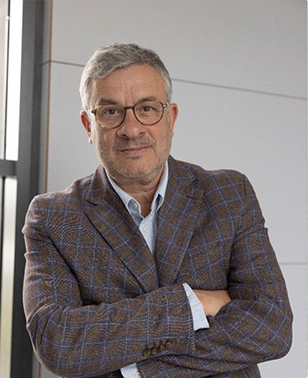
Title: Controlling Hysteresis Processes of Halide Perovskite for Solar Cell and Neuromorphic Applications
Prof. Juan Bisquert, Universitat Politècnica de València-Consejo Superior de Investigaciones Científicas, Spain
Biography: Juan Bisquert is a Distinguished Research Professor at Instituto de Tecnología Química (Universitat Politècnica de València-Consejo Superior de Investigaciones Científicas). He is Executive Editor for Europe of the Journal of Physical Chemistry Letters. He has been distinguished in the list of Highly Cited Researchers from 2014 to 2023. The research activity of Juan Bisquert has been focused on the application of measurement techniques and physical modeling in several areas of energy devices materials, using organic and hybrid semiconductors as halide perovskite solar cells. Currently the main research topic aims to create miniature devices that operate as neurons and synapses for bio-inspired neuromorphic computation related to data sensing and image processing. The work on this topic combines harnessing hysteresis and memory properties of ionic-electronic conducting devices as memristors and transistors towards computational networks.
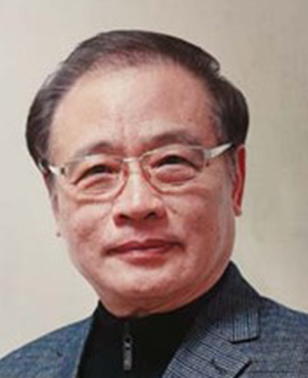
Title: Development of Emerging Solar Cell Technologies and Dual Carbon Goals
Prof. Junhao Chu, Shanghai Institute of Technical Physics, CAS, China
Biography: Prof. Junhao Chu (褚君浩), Academician of Chinese Academy of Sciences (CAS), Dean of Institute of Optoelectronics, Fudan University; Researcher of Shanghai Institute of Technical Physies, CAS; Editor-in-Chief of Journal of Infrared and Millimeter Waves and Materials Today Electronics, and Member of the 8th Chinese Academy of Sciences Presidium. He has long been engaged in infrared optoelectronic physics and semiconductor research, as well as emerging optoelectronic devices and interdisciplinary research. He has won three National Natural Science Awards and twelve Ministry-level Natural Science Award or the Science and Technology Progress Awards. He has published more than 800 peer-reviewed journal papers, 100 patents, 6 monographs in Chinese and English, and edited 10 books. He was rated as one of the top ten National Outstanding Scientific and Technologieal Workers (in 2014) and won the first National Innovation Medal (in 2017).
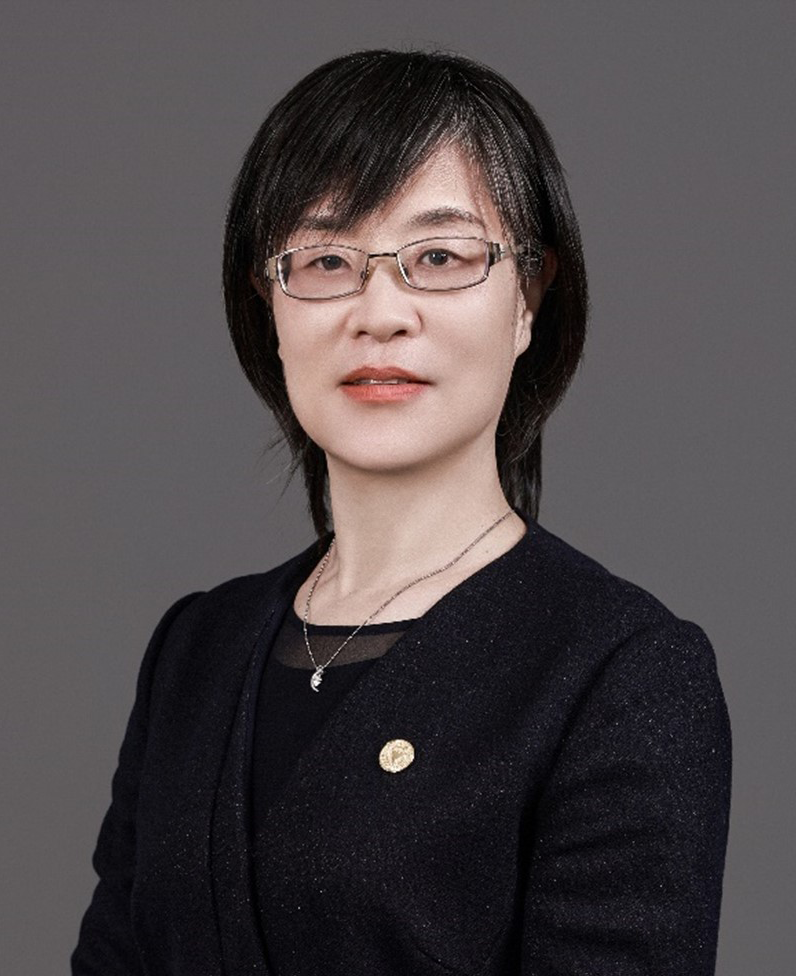
Title: Interface engineering leads to high performance perovskite solar cells
Prof. Hongzheng Chen, Zhejiang University, China
Biography: Hongzheng Chen is currently a Distinguished Professor at Department of Polymer Science and Engineering, Zhejiang University (ZJU), China. She completed undergraduate study from ZJU in 1988. She joined ZJU after obtaining her Ph.D. degree at the same university in 1994, and became a Full Professor in 1999. She once visited HongKong University of Science and Technology, University of Antwerpen and Interuniversities MicroElectronic Center of Belgium, and Stanford University. Her research interest focuses on the development of organic and perovskite materials for optoelectronic applications, including solar cells and photodetectors. She issued over 60 patents and published over 500 SCI-indexed papers, with more than 30,000 citations, and was selected as the highly cited researchers by Clarivate. Her fruitful research work led to a Youth Chemist Honor of Chinese Chemical Society in 2000 and a Chinese National Natural Fund for Distinguished Young Scholars in 2002. She is now served as Associate Editor of ACS Applied Polymer Materials.
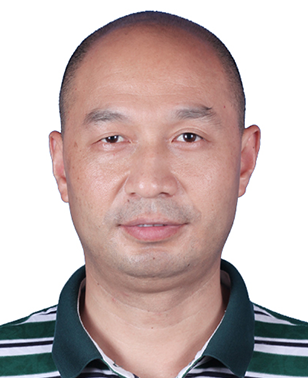
Title: Printing Process for Flexible Solar Cells
Prof. Yiwang Chen, Nanchang University, China
Biography: Dr. Yiwang Chen is a professor of Chemistry at Nanchang University and Jiangxi Normal University. He received his Ph. D from Peking University in 1999 and conducted his postdoctoral work at Johannes Gutenberg-Universität Mainz and Philipps-Universität Marburg in Germany as awarded an Alexander von Humboldt fellowship. He joined the Nanchang University in 2004. He has been honored by the National Science Fund for Distinguished Young Scholars in 2014 and Fellow of the Chinese Chemical Society (FCCS) in 2023. Currently he is serving as a president of Gannan Normal University since 2022. He has ever been Dean of the College of Chemistry at Nanchang University since 2009-2019 and vice-president of Jiangxi Normal University since 2019-2022. His research interests include polymer solar cells, perovskite solar cells, hybrid supercapacitors, sodium-ion batteries, electrocatalysis for zinc-air batteries and synthesis, and contact electrification. His research project has been awarded “Second Prize of Outstanding Achievement Award of Scientific Research of the Ministry of Education” in 2019, “First Prize of Natural Science of Jiangxi Province” in 2023 and Gold Medal of The Geneva Salon International Des Inventions in 2022.
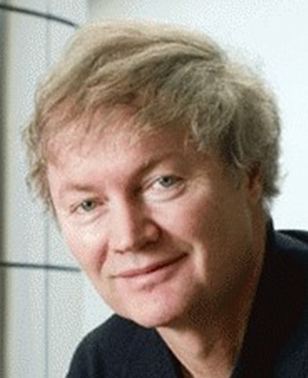
Title: Molecular Photovoltaics and the Stunning Rise of Perovskite Solar Cells
Prof. Michael Grätzel, Ecole Polytechnique Fédérale de Lausanne, Switzerland
Biography: Michael Graetzel is a Professor at EPFL where he develops photosystems for the generation of electricity and chemical fuels from sunlight. Michael graduated from the Technical University Berlin and was a postdoctoral fellow at the University of Notre Dame before joining the EPFL faculty as a professor of physical chemistry. There, he started his ground breaking investigations on colloidal semiconductor nanocrystals, which generated several new research fronts worldwide. Michael is well known for his discovery of mesoscopic dye sensitized solar cells, which in turn prompted the rise of perovskite solar cells, triggering a second revolution in photovoltaics. Michael’s most recent awards include the Rank Prize, BBVA Foundation Frontiers of Knowledge Award, Millennium Technology Prize, Global Energy Prize, Marcel Benoist Prize and Balzan Prize. He is an elected member of several learned societies including the Royal Society (UK) and the Chinese and German Academies of Science as well as the Swiss Academy of Technical Sciences and the Royal Spanish Academy. Michael received 14 honorary doctor degrees and his publications have been cited 485’000 times with an H-factor of 302.
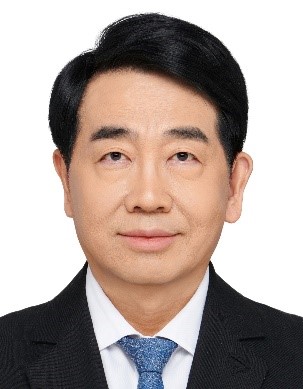
Title: Flexible Electronics:The Key to Genuine Innovation in Future Destructive Technologies
Prof. Wei Huang, Northwestern Polytechnical University,China
Biography: Professor Huang Wei is Academician of the Chinese Academy of Sciences (CAS), and International Member of the National Academy of Engineering of USA (NAE), Russian Academy of Sciences (RAS). He is an eminent scientist in the area of organic optoelectronics and flexible electronics. He is also the General Director of the State Laboratory for Organic Electronics and Information Displays, Frontiers Science Center for Flexible Electronics (FSCFE) of the Ministry of Education, the Basic Science Center for Flexible Electronics of the National Natural Science Foundation of China, and the Key Laboratory of Flexible Electronics. He is Chair Professor of "The Recruitment Program of Global Talents" and the "Cheung Kong Scholars Program", Winner of the "National Outstanding Youth Fund", and the Chief Scientist of "The National 973 Programs". He was awarded Honorary Doctorate by the Russian Academy of Sciences, University of Sheffield, and University of Johannesburg. He is also the Fellow of the Royal Society of Chemistry (RSC), the Optical Society of America (OSA), the Society of Photo-Optical Instrumentation Engineers (SPIE), the Singapore National Institute of Chemistry (SNIC), and President of the Federation of Engineering Institutions of Asia and the Pacific (FEIAP), and Senior Adviser to the President and Member of the Executive Council of the World Federation of Engineering Organizations (WFEO). He is also Visiting Professor of the National University of Singapore, Nanyang Technological University, University of Hong Kong, and Honorary Professor or Adjunct Professor of University of Wollongong of Australia, Peking University, the Institute of Chemistry of the Chinese Academy of Sciences, Nankai University, Xiamen University, and several other prestigious academic institutions. Moreover, he was awarded the Second-class Prize of the National Natural Science Award in 2013 and 2018 respectively, the Technological and Scientific Progress Award from the Ho Leung Ho Lee Foundation of Hong Kong in 2014, the Top 10 Progress in Science and Technology of China’s Universities from Ministry of Education in 2016 and 2022 respectively, the First-class Prize of the Natural Science Award of the Ministry of Education in 2016, 2017, 2018, and 2021 respectively, the first prize of the Natural Science Award of the Chinese Institute of Electronics in 2020, 2021, and 2022 respectively, the first prize of the Natural Science Award of the China Petroleum and Chemical Industry Federation in 2023, and the first prize of the Natural Science Award of the Chinese Optical Society in 2024.
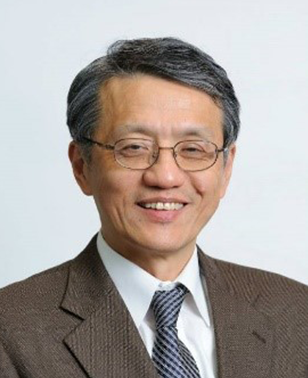
Title: Perovskite solar cells: from efficiency to stability
Prof. Liyuan Han, Shanghai Jiao Tong University, China
Biography: Dr. Liyuan Han is the chair professor of Shanghai Jiao Tong University. He received his Ph.D. degree from the University of Osaka Prefecture, and had been worked at SHARP Corporation for 15 years, starting on the research of solar cells. In 2008, he moved to National Institute for Materials Science, Japan, and established a research center of next generation solar cells. He is an inventor of more than 150 patents and an author in ca 300 scientific papers on top-level journals such as Science, Nature, Nature Energy, Energy & Environmental Science, and Advanced Materials in the field of next generation solar cells. He was selected as a highly cited researcher during 2019-2023. His current research interests involve fundamental research in perovskite solar cells and to fabricate large-area, highly efficient and stable perovskite solar cells for commercialization.
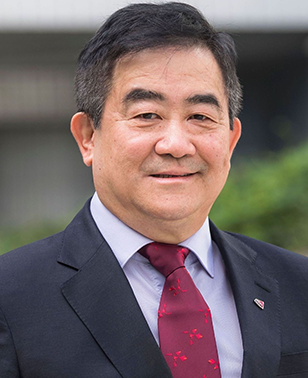
Title: Highly Efficient and Stable Organic and Perovskite Solar Cells for Scalable Clean Energy
Prof. Alex Jen, City University of Hong Kong, Hongkong, China
Biography: Professor Alex Jen, a renowned scientist and eminent leader, joined City University of Hong Kong in 2016. He is the Lee Shau Kee Chair Professor of Material Science and the Founding Director of Hong Kong Institute for Clean Energy (HKICE). Professor Jen is a distinguished researcher with a well-cited publication record. He has co-authored >1060 publications, given over 700 invited presentations, has >94,000 citations and an H-index of 157, and is a co-inventor for more than 67 patents and invention disclosures. His inter-disciplinary research interests are in organic/hybrid functional materials and devices for photonics, energy, sensors, and nanomedicine. He was named by Thomson Reuters as one of the “Highly Cited Researchers” in 2014-2023 and as one of the "World's Most Influential Scientific Minds" in 2015 and 2016 in materials science.
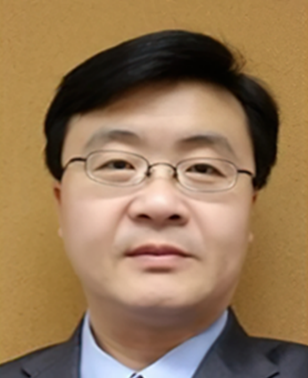
Title: Progress in Printable Solar Cells with Organic Semiconductors
Prof. Gang Li, HongKong Polytechnic University, Hongkong, China
Biography: Prof. Gang Li is Chair Professor of Energy Conversion Technology, Sir Sze-Yuen Chung Endowed Professor in Renewable Energy in the Department of Electrical and Electronic Engineering (EEE), The Hong Kong Polytechnic University. He serves as Director of Guangdong-Hong Kong-Macao Joint Laboratory for Photonic-Thermal-Electrical Energy Materials and Devices, and Associate Director of HK PolyU’s Research Institute for Smart Energy (RISE). His research interests are organic semiconductor, and organo-metal halide hybrid perovskite based thin-film optoelectronic devices – solar cells, photodetectors and LEDs. He has published ~260 papers in peer review journals including Nature Materials, Nature Photonics, Science, Nature Review Materials etc. His research works have been cited over 82000 times (Google Scholar), in which 21 papers have over 1000 citations. He has been recognized as a Highly Cited Researcher from 2014-2023 (Materials Science 2014 – 2019; Physics 2017-2018, Chemistry 2018, Cross-field 2020-2023) by Thomson Reuter / Clarivate Analytic, with a H-Index of 94. He is Fellow of Royal Society of Chemistry, UK, Optica (OSA) Fellow, Fellow of The International Society for Optics and Photonics (SPIE), and Hong Kong RGC Senior Research Fellow.
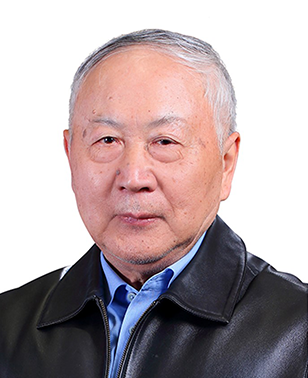
Title: Flexible perovskite solar cells and perovskite/organic tandem solar cells
Prof. Yongfang Li, Institute of Chemistry Chinese Academy of Sciences, China
Biography: Yongfang Li is a professor in Institute of Chemistry, Chinese Academy of Sciences (ICCAS) and in Soochow University. He received his Ph. D. degree from department of Chemistry, Fudan University in 1986, then did his postdoctoral research at ICCAS from 1986 to 1988. He became a staff in 1988 and promoted to professor in 1993 in ICCAS. He was elected as a member of Chinese Academy of Sciences in 2013. He ever did his visiting research at Institute for Molecular Science, Okazaki, Japan from 1988 to 1991 and at University of California at Santa Barbara, USA, from 1997 to 1998
His present research field is photovoltaic materials and devices for organic solar cells and perovskite solar cells. He has published more than 900 research papers and the published papers have been cited by others for more than 84,000 times with H-index of 146. He was awarded the Second-Grade National Award of China on Natural Sciences for two times (1995 on “The studies on conducting polypyrrole” and 2018 on “Photovoltaic materials of the conjugated polymer donors with conjugated side chains and indene-fullerene bisadduct acceptors”).
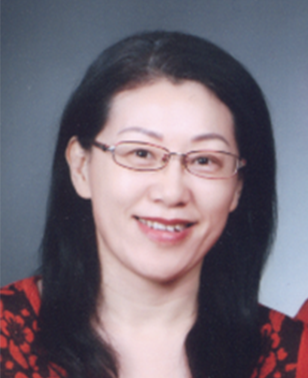
Title: Design of Nanomaterials for improving performance of perovskite solar cells
Prof. Hong Lin, Tsinghua University, China
Biography: Hong Lin is currently a full professor of School of Materials Science and Engineering, Tsinghua University, vice director of the Institute of New Energy Materials, and a Fellow of School of Engineering, The University of Tokyo. She also serves as an associate editor of Science and Technology of Advanced Materials (STAM), and vice chairman of the Special Ceramics Branch of the Chinese Ceramic Society.
Hong Lin received B.S. from the Department of Chemistry, Tsinghua University, China in 1987, and Ph.D. from Department of Applied Chemistry, Nagoya University, Japan in 1996. She had been an assistant professor in Institute for Chemical Research, Kyoto University, and a research scientist in AIST, Japan.
Prof. Hong Lin has widely contributed to the research of new energy materials, especially those used in nanostructured solar cells, and key issues such as structural design and materials preparation, electron excitation/transportation/recombination/collection, and their photo-chemistry or electrochemistry, of nano-materials.
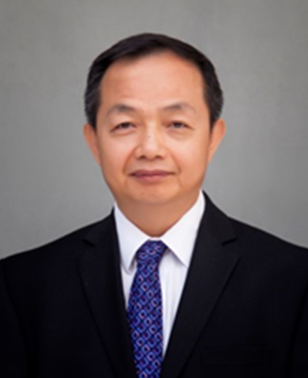
Title: Scaleup production of perovskite solar cells
Prof. Shengzhong Liu, Dalian Institute of Chemical Physics, Chinese Academy of Sciences, China
Biography: Dr. Frank Shengzhong Liu received his PhD from Northwestern University, USA in 1992. He is an RSC (Royal Society of Chemistry) Fellow. His H-index is 110 and i10-index over 350. Upon completing his postdoctoral research at Argonne National Laboratory in 1994, he joined high-tech industrial research, most notably on solar cells with Solarex/BP Solar and United Solar Ovonic. Professor Liu’s research focus includes nanomaterials, thin film materials, photovoltaic materials and solar cells. His major outcome in basic research has been published in scientific journals, including Science, Nature, Joule, Matter, Science Advances, Nature Communications, Advanced Materials, Energy & Environ. Sci., etc., 80 of them being enlisted in ESI’s "most cited paper" and “hot paper” lists. Many of his major inventions and patents have been converted into commercial technology and products. In 2011, he accepted a full-time professorship by Shaanxi Normal University and Dalian Institute of Chemical Physics, Chinese Academy of Sciences in 2012. He is now the director of Shaanxi Engineering Lab for Advanced Energy Technology, Shaanxi Key Laboratory for Advanced Energy Devices and Institute for Advanced Energy Materials, Shaanxi Normal University and Associate Director of Solar Energy Department, Dalian National Laboratory for Clean Energy. He serves as an associate Editor for NanoSelect. He is also an Editorial Board Member for Advanced Science, ACS Sustainable Chemistry & Engineering, J. Energy Chemistry and Scientific Report. He is selected as the top 1% most highly cited author by RSC and Clarivate Analytics. He is also among the “Top 2% Scientists Worldwide 2022”.
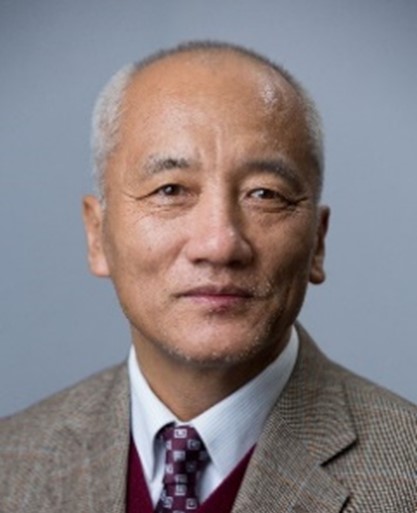
Title: Opportunities and challenges of emerging thin-film solar cells
Prof. Qingbo Meng, Institute of Physics, Chinese Academy of Sciences, China
Biography: Qingbo Meng is currently a full professor at Institute of Physics (IOP), Chinese Academy of Sciences (CAS) and University of Chinese Academy of Sciences He obtained bachelor degree from the School of Physics, Jilin University in 1987 and PhD degree in 1997 from Changchun Institute of Applied Chemistry, CAS. From 1997 to 1999, he was a postdoctoral fellow in IOP. From 1999 to 2002, he was a STA Fellow (Science and Technology Agency of Japan) and Researcher of the University of Tokyo and KAST respectively in Japan. He was selected as “Distinguished Young Scholars” from NSFC in 2007 and the project leader of the Fund for Creative Research Groups of China in 2014. He was awarded to “the Special Allowance of the State Council” in 2010 and “The president Award of the Tokyo University Science” in 2011. His current research interest focuses on solar energy materials & devices, including new generation thin film solar cells (such as perovskite solar cells, Kesterite solar cells) and artificial photosynthesis. He has published over 310 papers, which were cited above 17000 times (h-index 80). He has applied over 100 patents, and over 70 patents were authorized. He is now the member of Editorial Board for Electrochem. Commun. and the director member of Chinese Renewable Energy Society.

Title: Designing perovskite modules that are mechanically durable and able to survive under partial shading conditions
Prof. Michael McGehee, University of Colorado Boulder, USA
Biography: Mike McGehee is a Professor in the Chemical and Biological Engineering Department at the University of Colorado Boulder and is the Associate Director of the Materials Science and Engineering Program. He is the Director of the Department of Energy’s TEAMUP Consortium: Tandems for Efficient and Advanced Modules using Ultrastable Perovskites. He is a cofounder and the Chief Scientist of Tynt Technologies, a company that is commercializing dynamic windows based on reversible metal electrodeposition. He is an advisor to Swift Solar, which was cofounded by former members of his research group. He was a professor in the Materials Science and Engineering Department at Stanford University for 18 years. His current research interests are developing new materials for smart windows and solar cells. He has previously done research on polymer lasers, light-emitting diodes and transistors as well as transparent electrodes made from carbon nanotubes and silver nanowires. His group makes materials and devices, performs a wide variety of characterization techniques, models devices and assesses long-term stability. He received his undergraduate degree in physics from Princeton University and his PhD degree in Materials Science from the University of California at Santa Barbara.

Title: Structure-Property Tunability using Chirality and Symmetry Breaking in Hybrid Perovskites
Prof. David Mitzi, Duke University, USA
Biography: David Mitzi is the Simon Family Distinguished Professor at Duke University, with appointments to the Departments of Mechanical Engineering and Materials Science and Chemistry. He received his B.S. in Electrical Engineering from Princeton University (1985) and his Ph.D. in Applied Physics from Stanford University (1990). Prior to joining the faculty at Duke (2014), Dr. Mitzi spent 23 years at IBM’s Watson Research Center, where his focus was on the search for and application of new electronic materials, including organic-inorganic perovskites and other solution-processable inorganic materials for PV, LED, transistor and memory applications. He also served as manager for the Photovoltaic Science and Technology Department, where he initiated/managed a multi-company program to develop a low-cost, high-throughput approach to deposit thin-film chalcogenide-based absorbers for high-efficiency photovoltaics. Dr. Mitzi is a Fellow of the Materials Research Society (MRS), a Clarivate Analytics Highly-Cited Researcher, and received the 2020 American Chemical Society (ACS) Award in the Chemistry of Materials for his pioneering work on halide perovskites.
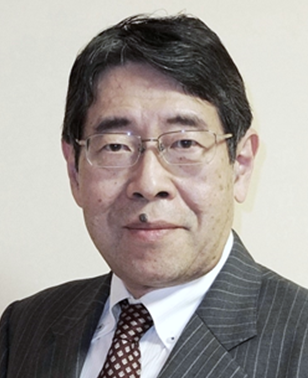
Title: Molecular and interfacial engineering for high voltage perovskite solar cells
Prof. Tsutomu Tom Miyasaka, Toin University of Yokohama, Japan
Biography: Completed PhD at the Graduate School of Engineering, the University of Tokyo in 1981. After working as a senior researcher at the Ashigara Research Institute of Fuji Photo Film Co., Ltd., he was a professor at the Graduate School of Engineering, Toin University of Yokohama from 2001 to 2017. He also served as a professor at the Graduate School of Arts and Sciences, University of Tokyo from 2005 to 2010. In 2004, he founded Peccell Technologies Inc. and became its CEO. Since 2017, he has been a specially appointed professor at Toin University of Yokohama. His specialties are photoelectrochemistry and organic and hybrid photovoltaics. He invented the perovskite solar cell in 2006 and is currently working on high-voltage lead-based and lead-free perovskite solar cells, as well as developing highly efficient, lightweight and flexible film-type solar cells. He has received the Japan Academy Prize (2024), Rank Prize (2022), Japan Society of Applied Physics Award (2019), Chemical Society of Japan Award (2017), Clarivate Analytics Citation Honor Award (2017), etc.
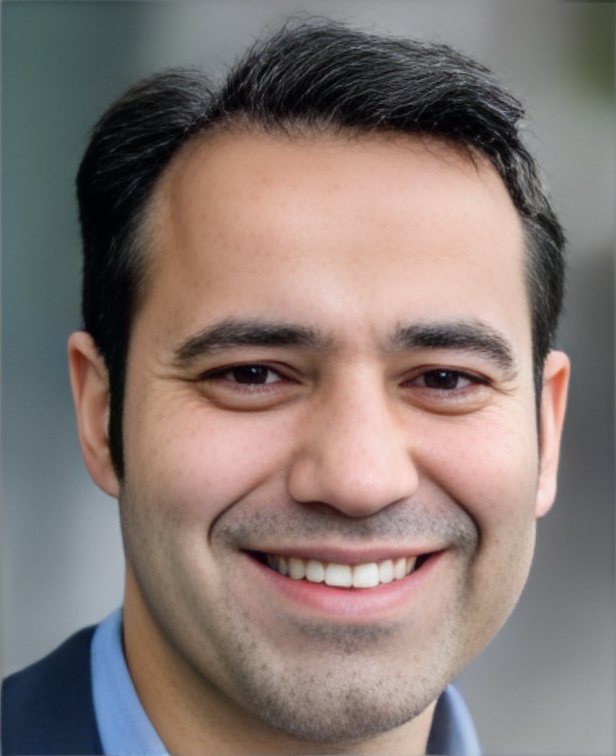
Title: The Versatility of Perovskite Materials for Optoelectronics
Prof. Michael Saliba, Universität Stuttgart, Germany
Biography: Prof. Michael Saliba is a full professor and the director of the Institute for Photovoltaics (ipv) at the University of Stuttgart. He holds a dual appointment at the Helmholtz Research Center Jülich, Germany. His research focuses on a deeper understanding and improvement of optoelectronic properties of photovoltaic materials with an emphasis on emerging perovskites for a sustainable energy future. One example for his groundbreaking research is the development and pioneering of a general strategy for the combinatorial synthesis and exploration of novel perovskite compositions. Michael is the Speaker of the Graduate School for “Quantum Engineering”. He was awarded a Starting Grant by the European Research Council.
Previously, Michael was an Assistant Professor at TU Darmstadt, a Group Leader at Fribourg University and a Marie Curie Fellow at EPFL with research stays at Cornell and Stanford. He obtained his PhD at Oxford University and MSc degrees in Physics and Mathematics at Stuttgart University together with the Max Planck Institute for Solid State Research.
Michael has published 200 works attracting 50’000 citations and filed 5 patents in the fields of plasmonics, lasers, LEDs and perovskite optoelectronics. He was on the Early Career Board of Nano Letters, is on the Editorial Advisory Board of ACS Energy Letters and a Senior Editorial Board Member of Materials Today. Clarivate lists him as Highly Cited Researcher for six times in a row since 2018. He was awarded the Heinz-Maier-Leibnitz prize by the German Research Foundation (DFG), the Early Career Prize in Semiconductors by IUPAP, and named as one of the World’s 35 Innovators Under 35 by the MIT Technology Review; he is also a Fellow of the Internation Science Council. In addition, Michael received the Kavli Foundation Early Career Lectureship in Materials Science from the Materials Research Society, the Curious Minds Award from Merckn the EU-40 Materials Award from the European Materials Research Society, and the High Impact Award from the Helmholtz Association.
Title: Material Engineering for Enhanced Perovskite Solar Cell Performance
Prof. Sang Il Seok, Ulsan National Institute of Science and Technology, Korea
Biography: Sang Il Seok is currently a Distinguished Professor in the Department of Energy and Chemical Engineering at Ulsan National Institute of Science and Technology (UNIST), Korea. He earned his Ph.D. in Inorganic Materials Engineering from Seoul National University and conducted postdoctoral research at Cornell University, focusing on the Fe-Ti-O Spinel structure. Prof. Seok has also been a visiting scholar at the University of Surrey and EPFL. Prior to joining UNIST in 2015, he was a principal investigator at the Korea Research Institute of Chemical Technology (KRICT) and a professor at Sungkyunkwan University. Renowned for his pioneering work in perovskite solar cells, Prof. Seok is a highly cited researcher and has published extensively in top journals. His awards include the Korean Scientist Award (2017), the Kyung-Ahm Prize (2019), and the Rank Prize (2022). His research focuses on hybrid materials for energy devices, especially perovskite solar cells.

Title: Green Printing Technology for Manufacturing Functional Devices
Prof. Yanlin Song, Institute of Chemistry Chinese Academy of Sciences, China
Biography: Yanlin Song is currently the director of the Key Laboratory of Green Printing at the Institute of Chemistry, Chinese Academy of Sciences. He has been engaged in interdisciplinary research on materials science and printing technology, and has made systematic innovative achievements in the creation of nanomaterials, interface droplet manipulation, and printing micro/nano manufacturing as well as functional devices. He has published over 600 SCI papers, with over 40,000 citations and an H-index of 109. He has been granted more than 170 invention patents from China, USA, European Union, Japan and Korea, etc.

Title: Perovskite solar cells and halometallates based X-Ray detectors development at the Faculty of Materials Science of Moscow State University
Prof. Alexey Tarasov, Moscow State University, Russia
Biography: Dr. Alexey Tarasov obtained a PhD in Solid State Chemistry and Physical Chemistry at Institute of Problems of Chemical Physics, Russian Academy of Science and Lomonosov Moscow State University (MSU), Russia. After graduating from MSU in 2011 he joined DuPont Sustainable Solutions department of DuPont company and spent several years in Germany and Russia serving as process engineer and business-consultant. In 2016 he moved back to MSU and build up the Laboratory of New Materials for Solar Energetics (NMSE) at the Faculty of Materials Science where he has focused on efficiency and stability improvement of perovskite solar cells and on development of new hybrid luminescent materials. In 2016-2020, in addition to his academic activities, he served as First vice-Rector of Joined Russian-Chinese MSU-BIT University in Shenzhen. NMSE lab is currently working on several directions such as perovskite solar cells and tandems industrial fabrication techniques, the development of thin film OLEDs and X-Ray visualization materials and devices.
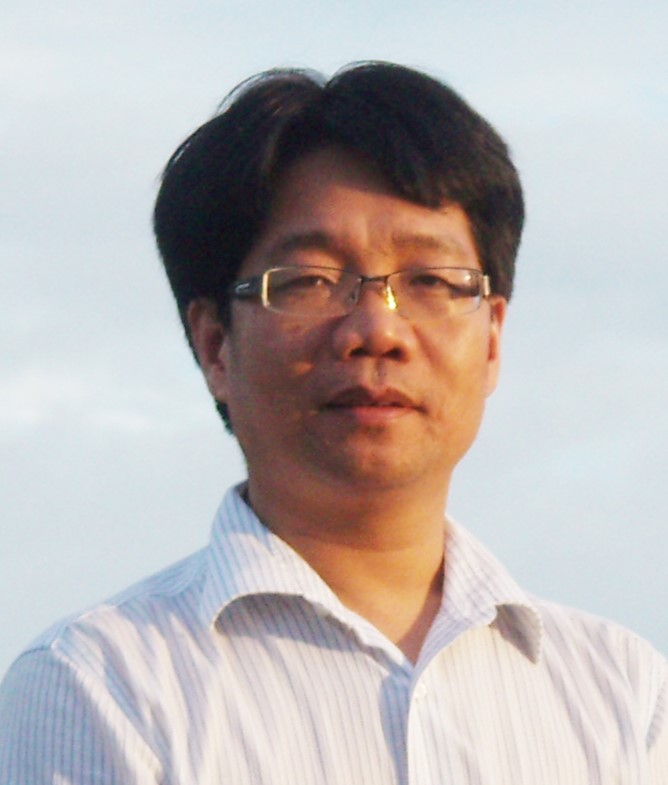
Title: Organic Semiconductors Towards High-Performance Perovskite Solar Cells
Prof. Peng Wang, Zhejiang University, China
Biography: Dr. Peng Wang is a Professor in the Department of Chemistry, Zhejiang University. He earned his Ph.D. in 2001 from the Changchun Institute of Applied Chemistry, Chinese Academy of Sciences. He has extensive expertise in the organic optoelectronic materials and devices. He has published more than 170 papers, including Nat. Mater., Joule, J. Am. Chem. Soc., Angew. Chem. Int. Ed., Energy Environ. Sci., and Adv. Mater., with ten of his papers receiving over 500 citations each.
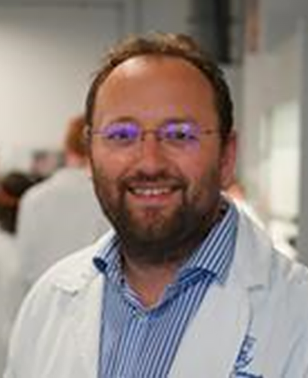
Title: Advancing Continuous Roll-to-Roll Production: Harnessing Carbon in Perovskite Solar Cells
Prof. Trystan Watson, Swansea University, UK
Biography: Professor Trystan Watson, Swansea University, Materials Science and Engineering. Professor Watson's research area is thin film printed PV with a specialism in developing new technologies for the manufacture of novel photovoltaics including deposition and curing processes and their characterisation using electrochemistry, photochemistry or optoelectronic methods.
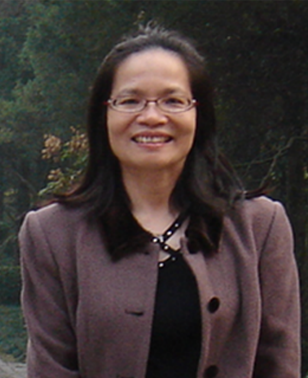
Title: A Journey to high-efficiency perovskite solar cells/modules
Prof. Chun-Guey Wu, Central University, Taiwan, China
Biography: Professor Chun-Guey Wu received her Ph.D. degree in Chemistry from Michigan State University (U.S.A.) in 1992. From 1992 to 1994, she was a research scientist at Purdue University (U.S.A.). Professor Wu joined the faculty in the Department of Chemistry at Central University as an Associate Professor in 1994 and has been promoted to Full Professor since 2000. Since 2008, Professor Wu was honored by Central University to become one of the Distinguished Professors. Now she is the dean of College of Science. Her research interests are mainly focused on the “new-generation Photovoltaics, such as Dye-sensitized solar cells and perovskite solar cells”, including the development of the key components of the cells and cell fabrication engineering.
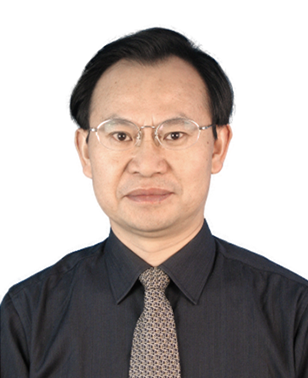
Title: Scalable fabrication of perovskite solar cells via magnetron sputtering
Prof. Dechun Zou, Peking University, China
Biography: Professor of Chemistry,College of Chemistry and Molecular Engineering, Peking University. Prof. Dechun Zou finished his BSc in material science and engineering department, Northwestern Polytechnical University, China in 1983.
His postgraduate research was carried out in Faculty of Engineering, Gunma University, Japan in 1985-1987. Then he entered the Department of Materials Sciences and Technology, Graduate School of Engineering, Kyushu University.
Dr. Dechun Zou received his doctoral degree from the Kyushu University, Japan, in 1990 (his supervisor was Prof. Shyogo Saito). He joined Mitsubishi Petrochemicals, Japan as a research scientist from 1990 to 1993, and Tokyo University of Agriculture and Technology as a visit researcher from 1994 to 1995, Casio Computer Co., Ltd., as a research contractor in 1996, a research contractor in CREST, JST, Japan (Tsutsui Project) in 1997. He was an associate professor in Kyushu University from 1998 ~ 2001. Since 2001, he has been a full professor in College of Chemistry and Molecular Engineering, Peking University, China.
Hosts

华中科技大学

Wuhan National Laboratory for Optoelectronics

Michael Grätzel Center for Mesoscopic Solar Cells
Co-Hosts

Jingjinji National Center of Technology Innovation

中国钙钛矿光电子产业联盟

Administration of Wuhan East Lake High-tech Development Zone

Wuhan Municipal Bureau of Economy and Informatization

Fuyang Municipal Bureau of Industry and Information Technology

万度光能
 沪ICP备2022003645号©Shanghai Learning Information Service Co. Ltd. All Rights Reserved